

Listeners:
Top listeners:
00:00
00:00
volume_up
chevron_left
-
 play_arrow
DisnDat HITZ DisnDat HITZ
-
play_arrow
Warlando Hitz Warlando Hitz
-
play_arrow
DisnDat Tunez Reggae,Dancehall and Afro Beats
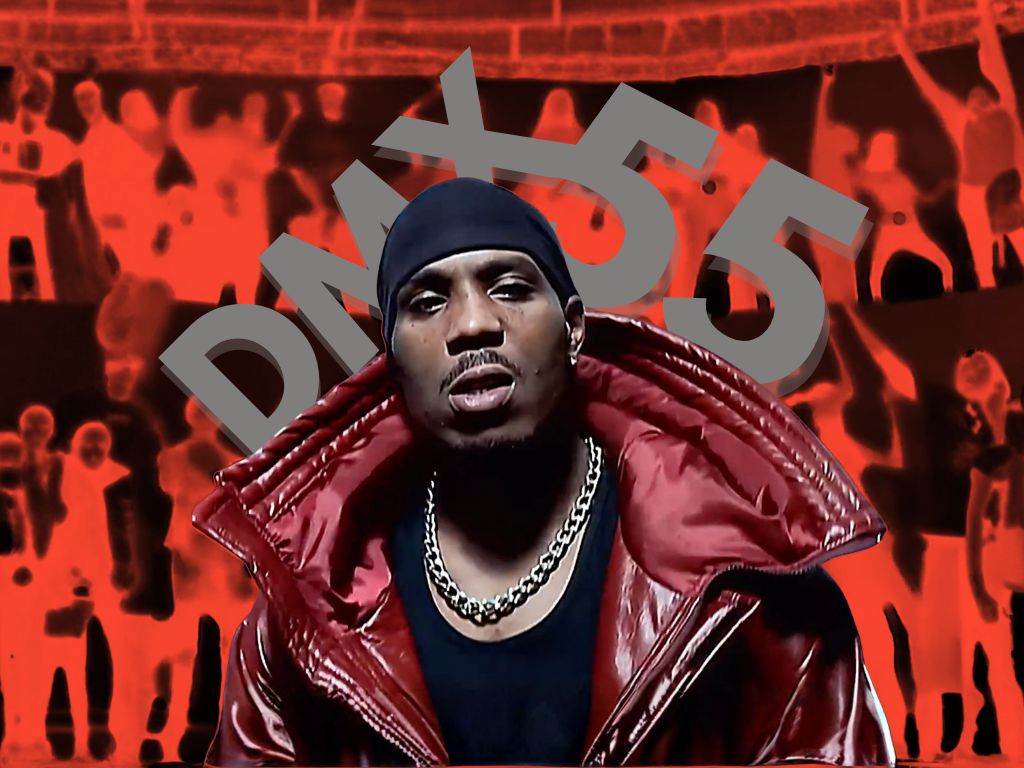
Today, Earl Simmons, the man the world knew as DMX, would’ve turned 55. I count myself among the blessed few who stood in his presence when the culture was shifting, when Hip-Hop was reeling from the deaths of Biggie and Tupac, and a shinier, more polished sound dominated the mainstream. Out of that vacuum stepped X. He was raw, untamed and unapologetically real. And the man bred in Yonkers, New York somehow reshaped Hip-Hop forever.
This was 1998: a pivotal year, not just for DMX, but for hip-hop’s heartbeat. While glossy aesthetics gained commercial traction, there was a hunger for something authentically rugged – for truth delivered with visceral force. Enter It’s Dark and Hell Is Hot and Flesh of My Flesh, Blood of My Blood. In the same calendar year, X dropped two albums that didn’t just top charts – they rattled the industry and reoriented its compass toward raw emotion and street reality.
I had the privilege of interviewing him multiple times that year, which was also the year AllHipHop was born. On the first occasion, X wasn’t in interview mode at all. Irv Gotti had to coax him into sitting still. In classic Dark Man X fashion, all he cared about was rapping. Before we even started, he broke out into freestyle. This was not for the camera, because there were no cameras present. It was not for hype or clout. To me, this was because the music lived in him. That energy, that ferocity, was his gift and his burden.
Hip-hop hasn’t heard a presence like that before or since.
DMX was a man of contradictions, scary one moment, tender the next; a warrior wrestling with demons, yet spiritual in ways few dare admit. As he once told Blackfilm, “Right, wrong, good, bad, heaven, hell. I think that is the theme of my life … you have to know both in order to honestly choose one.”
His spirituality wasn’t superficial. It bled through every album, every “Prayer” track, every confession of struggle and redemption. He spoke often of faith not as an accessory, but as survival: “I’ma shine regardless … the Lord has already written my steps out so no one can do anything to stop it.”
Still, beneath that towering voice and commanding stage presence was a guy who knew pain. In later years, whispers about his struggles with addiction and fatigue followed him. Rumors that were hard to separate from truth. I remember one interview where X nearly nodded off mid-conversation. My colleague Amanda Seales and I exchanged glances, finally ending the interview. We voiced concern quietly to Dee from Ruff Ryders, and she just shrugged, saying, “that’s just X” without further expansion on the thought. Life on the edge never looked like anything else.
Decades on, I sat down with his uncle, Ray Copeland, who offered insight rooted not in headlines but in family history. He reminded me that X wasn’t lazy or lost or even drugged like that. He overworked himself. Ray said, “He moved in life in a perpetual state of fatigue” — always exhausted, living on short naps between studio sessions, tours, films and prayer meetings.
And yet, even with all of that intensity, he never lost his human core. Longtime collaborators like Swizz Beatz have spoken publicly about X’s selflessness: “He lived his life for everyone else… you ain’t ever seen him next to a Lamborghini… he didn’t care about that.”
When the world lost him in April 2021 at age 50, the mourning wasn’t just about a rapper. It was about a voice. This was a pure soul willing to expose fear, faith, pain and power without pretense. Tributes poured in from every corner, from fans to icons like LeBron James, who called him a “legend” upon his passing.
Yet, for all the music and memories he left us, there’s always that lingering question: What would’ve been? What heights might he have reached with more time? What battles might he have won? I don’t spend every day on that thought, but I feel it. I know others do too.
Here’s what I firmly believe: DMX didn’t die in the way most legends do. His spirit – that raw, electric, uncompromising force – didn’t fade. It transcended. It lives in every gritty Hip-Hop venue that refuses to sugarcoat life, in every mini-prayer woven through rhyme, in every artist who dares to speak without filters. They still exist.
DMX is infinite.
His music still slaps. His voice still reverberates through new generations. Stories of him, all of them, from the funny and the wild alike keep coming. And the more we share them, the more his legacy breathes.
I still love a good DMX story. I still press play all the time and let that bark cut through the noise. Everywhere, the house, the gym, the car and beyond. And yeah — I would love another interview with him. But what we do have is enough to keep us thinking, feeling, grieving, celebrating, and even growing.
Rest in power, Earl Simmons. You were and remain Dark Man X.
This is the first interview in 1998.

DMX was super tired. This is after he woke up.

DMX made my buy Henny for this interview. Gina had X talking about Drake, but I was trying to get his Top 5 Dead or Alive.

Related
Now On Air
Top popular

YNG LEGEND Shines Under TIDAL’s Spotlight With New Single “Free Pain!”

Kay Flock Had Mental Disability & Still Received 30 Years In Prison

French Montana and Max B Reunite on “Make America Wavy Again,” Announce Coke Wave 3.5: Narcos
Scheme God Meechi Unleashes New Project “Pablo Had A Baby”

Big Boss Vette Unleashes New Single and Video “Talk Yo Sh*t”

Post comments (0)